 Social Innovation Forum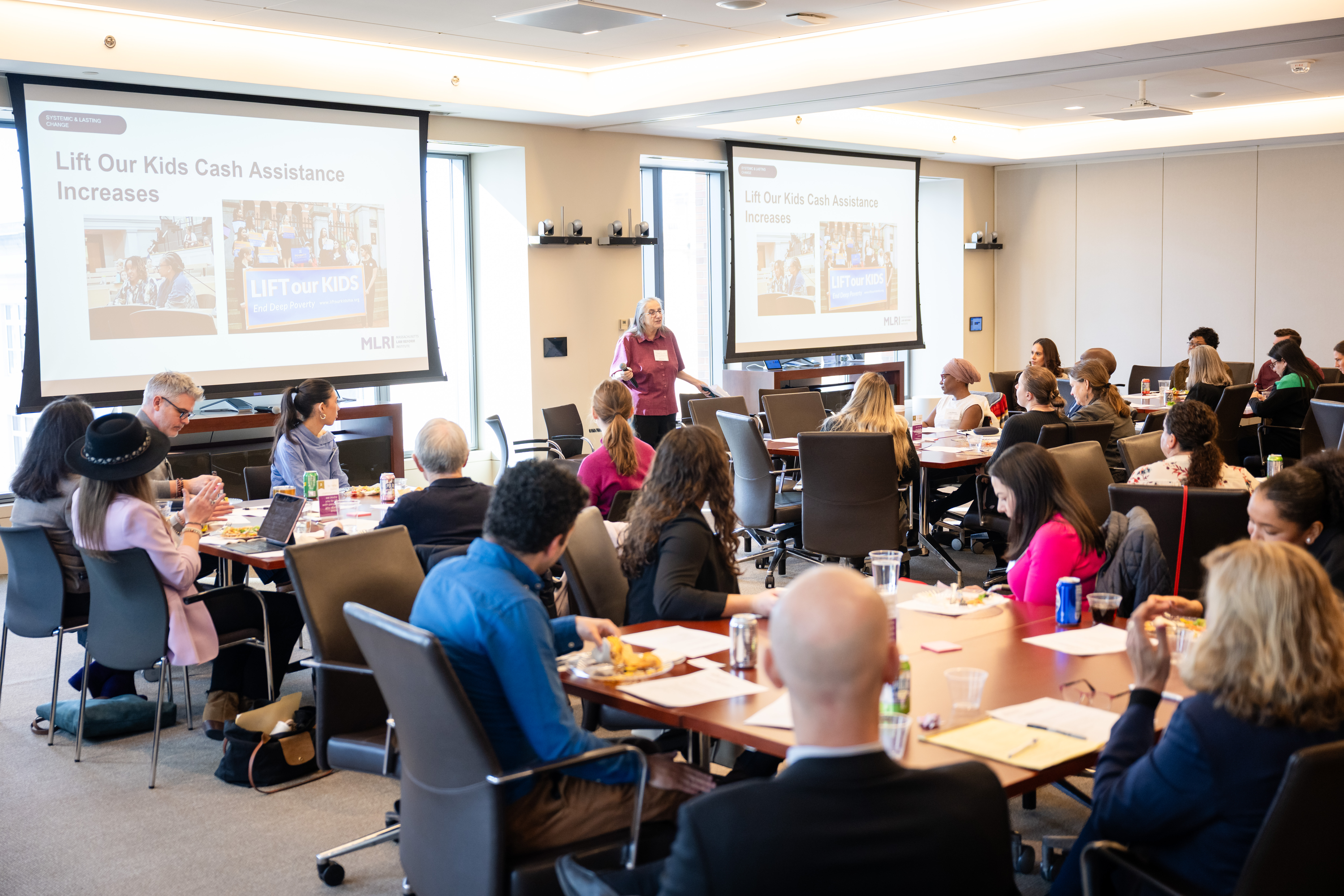
© Mike Ritter
Social Innovation Forum was eager to convene our nonprofit and funder communities for our November 17th event, “Rising to the Challenge: Why Supporting Policy and Advocacy is Critical Now.” In planning for the event, we considered how to convey hope while remaining grounded in the incredibly challenging reality we are all facing. At the event, through many inspiring speakers reflecting on the specific ways they were taking action to support their communities, it became clear that our hope would come from knowing what actually can be done to create change.
Our event began with a welcome from Molly Stifler of the sponsoring Stifler Family Foundation. She shared how: “At this moment, nonprofits are facing unprecedented challenges, especially those dedicated to policy and advocacy work. They are responding to growing community needs while facing increased funding instability. Now more than ever, I remain steadfast in my support of these vital organizations, and I encourage my colleagues to do the same.” Having a funder share about the importance of supporting nonprofits that protect all of our rights set the tone for the room: deep commitment and shared belief in the significance of advocacy work.
© Mike Ritter
Jamie Sabino shares specific examples of advocacy wins.
Jamie Sabino, Deputy Director of Advocacy at the Massachusetts Law Reform Institute, outlined various strategies to advance systemic change, including:
She shared detailed examples of these tactics in action, citing many wins leading to lasting change for communities. Exploring when systemic advocacy is the most effective approach, Jamie encouraged participants to consider if the issue:
© Mike Ritter
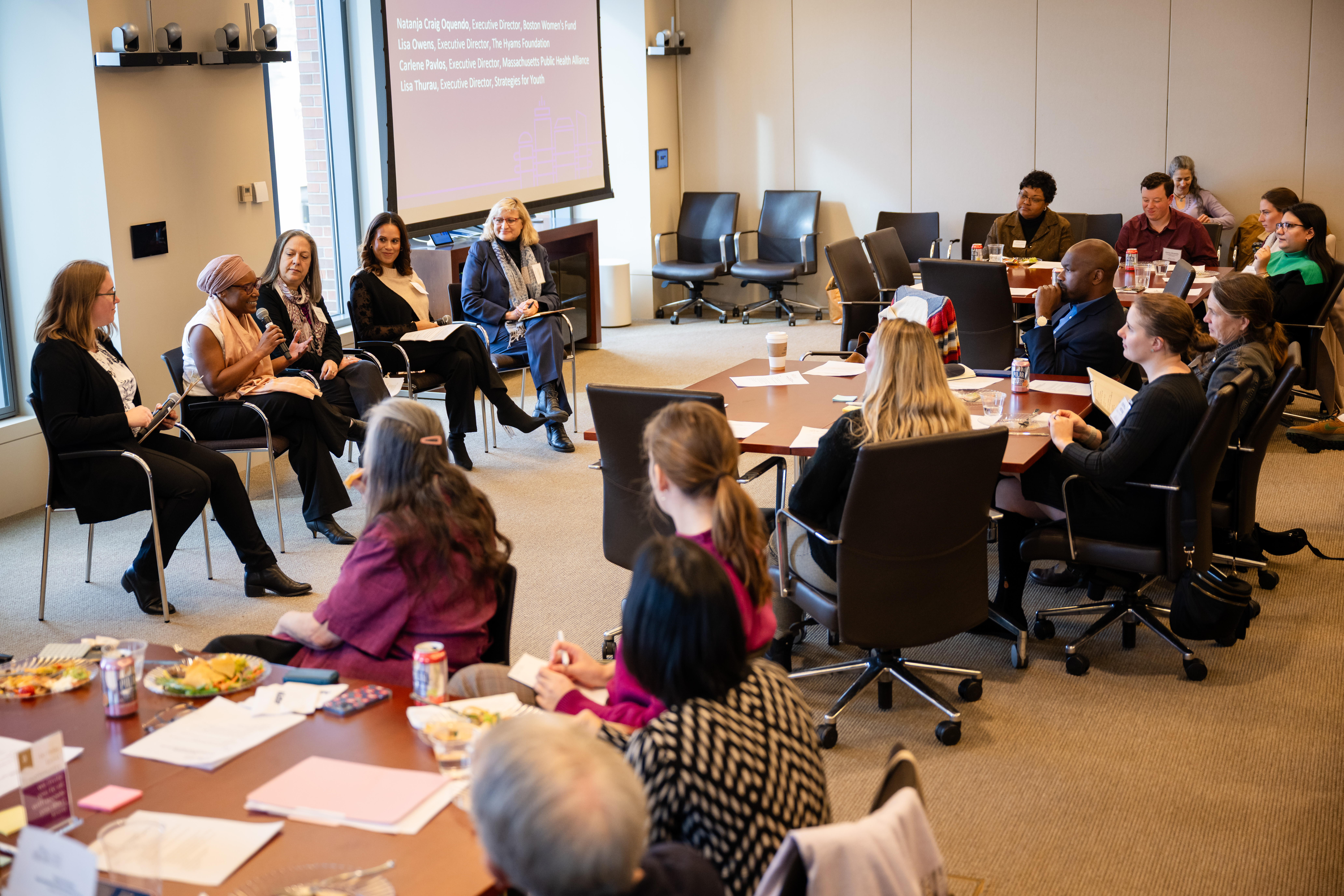
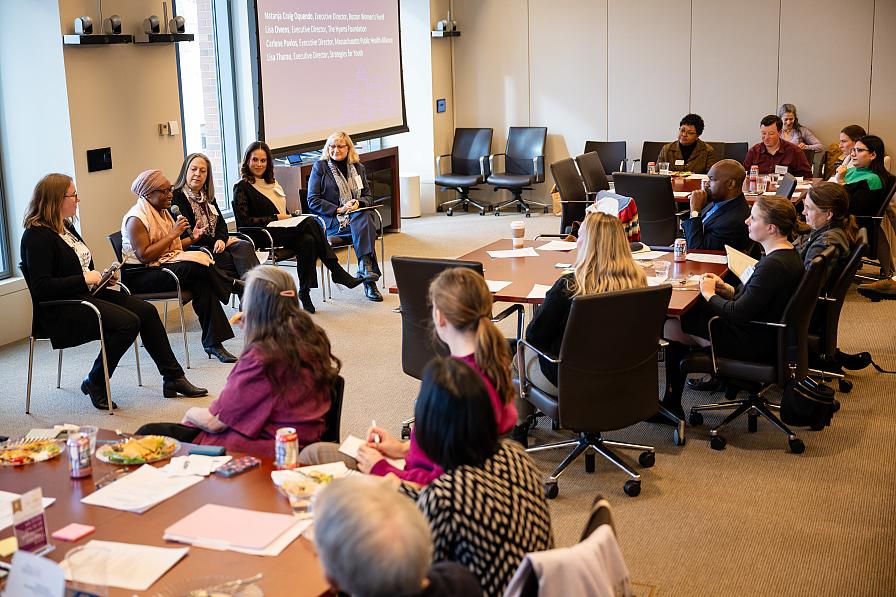
Lisa Owens speaks about her experiences as a funder to advance advocacy efforts.
With participants fired up about successes using advocacy approaches, it was time for our panel. Our panelists were:
Our nonprofit panelists, Lisa Thurau and Carlene Pavlos, emphasized the urgency of the challenges we are facing. Lisa Thurau expressed her gratitude for funders that offer continued support of advocacy work, especially partners who are committed for the long term. The discussion explored ways to keep people being served at the forefront, and Carlene Pavlos gave the example of her Board grounding itself in a racial equity framework at the beginning of meetings to serve just that purpose.
Lisa Owens and Natanja Craig Oquendo shared from their funder perspectives about what needed to be done for our communities and our sector now. By describing a specific strategy for redistributing “excess wealth” from endowment gains back into communities, Lisa Owens motivated the funders in the room to think creatively about what was within their power to substantially change or pilot. Participants were deeply moved when Natanja Craig Oquendo spoke about how people don’t live single-issue lives, and stressed the urgency of bolstering the intersecting systems that affect community wellbeing.
© Mike Ritter
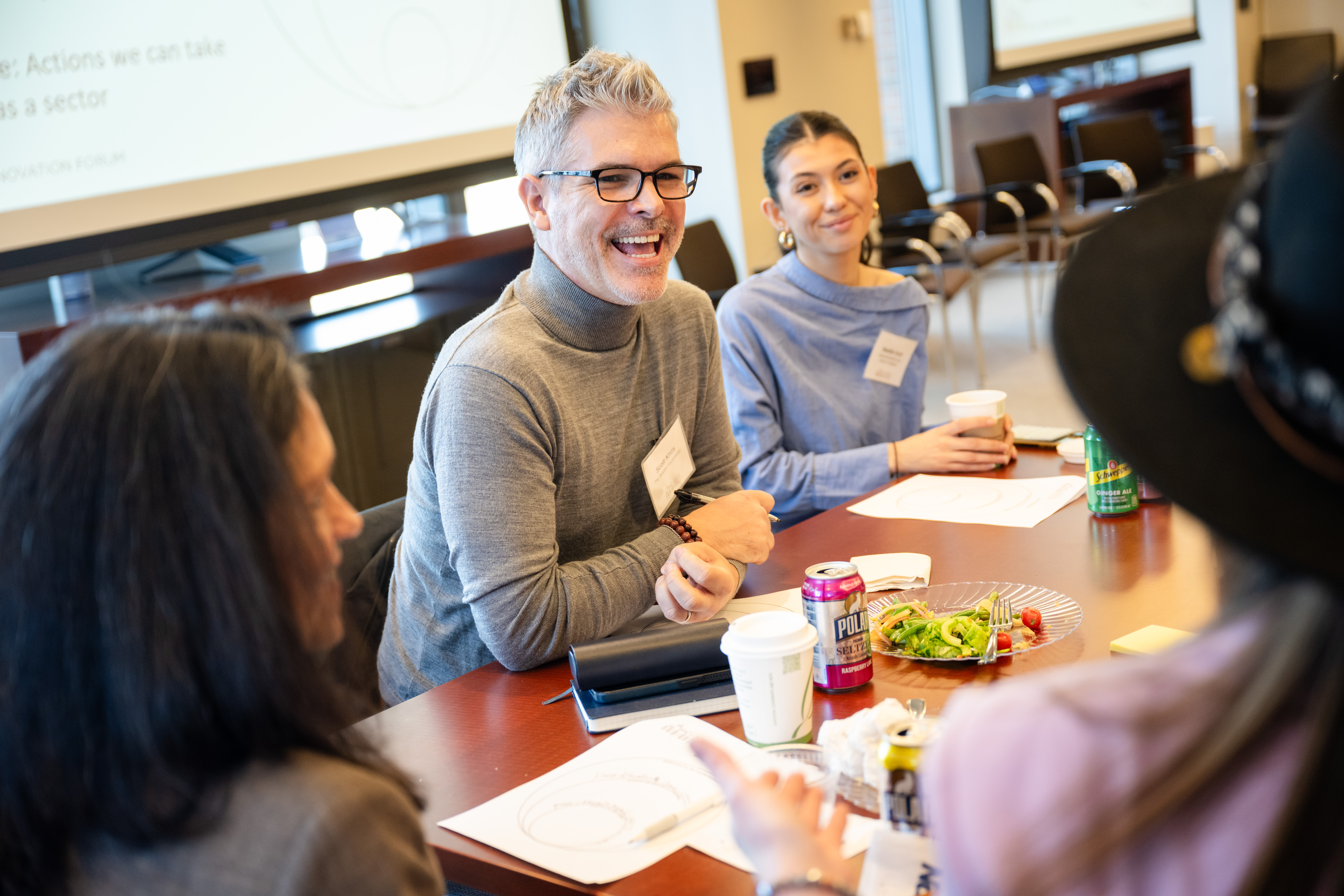
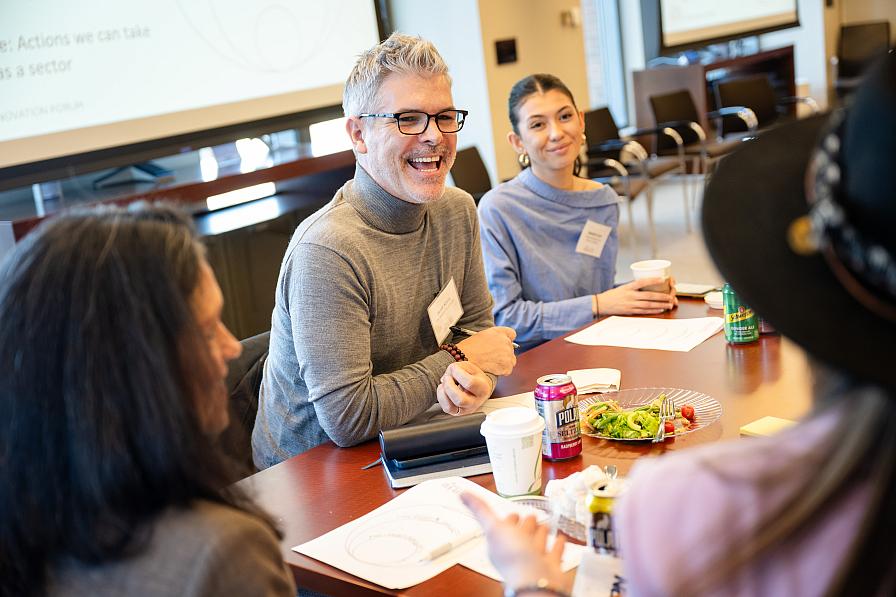
Table Facilitator Scott Knox engages with other participants.
We had participants reflect on actions they could take individually, with their collaborators, and as a sector. They shared these actions at their tables, as well as publicly on chart paper. We’d love to uplift a sample:
Overall, participants were buzzing with motivation and clear next steps. Instead of feeling hopeless due to the urgency of the issues surrounding us, we were spurred forward by our deep conversation so that we can use the power we have both in our individual roles and collectively to make positive change for our communities. The event was hopeful, and that hope came from community, momentum, and actions we can take together to actually move the needle to support the people at the heart of this work.
About the Author: Carina Traub is the Funder Learning Manager at the Social Innovation Forum, where she plans programming for funders. She has a deep appreciation for equitable partnerships and is eager to shift power dynamics together.